The North Carolina State Beekeepers Association Distinguished Professor in Apiculture is becoming quite the story in the world of beekeeping; as if to secure funding for the new apiculture research facility was not enough of an accomplishment! One year ago we had $283,000 in pledges and contributions for the endowment and needed an additional $384,000. Now the fund has over $590,000 and less than $77,000 is needed. Once we raise $667,000, the University will add enough to make the fund $1,000,000.
As a fellow beekeeper and President of the NCSBA, I am reaching out to you, one of the 5,000 strong community of NCSBA beekeepers to ask for a contribution of any size when you renew your membership for 2024. Mathematically speaking, a contribution of $15.40 from each of the 5,000 members would finish the deal. But realistically speaking, if half of the members were to make a small (or larger!) contribution we would be that much closer to our goal. The ground breaking ceremony for the new apiculture facility is scheduled for July of 2024. Please help the NCSBA reach the goal to have the endowment funded by then.
The results of our effort will be noteworthy.
Sincerely,
Rick Coor, NCSBA President
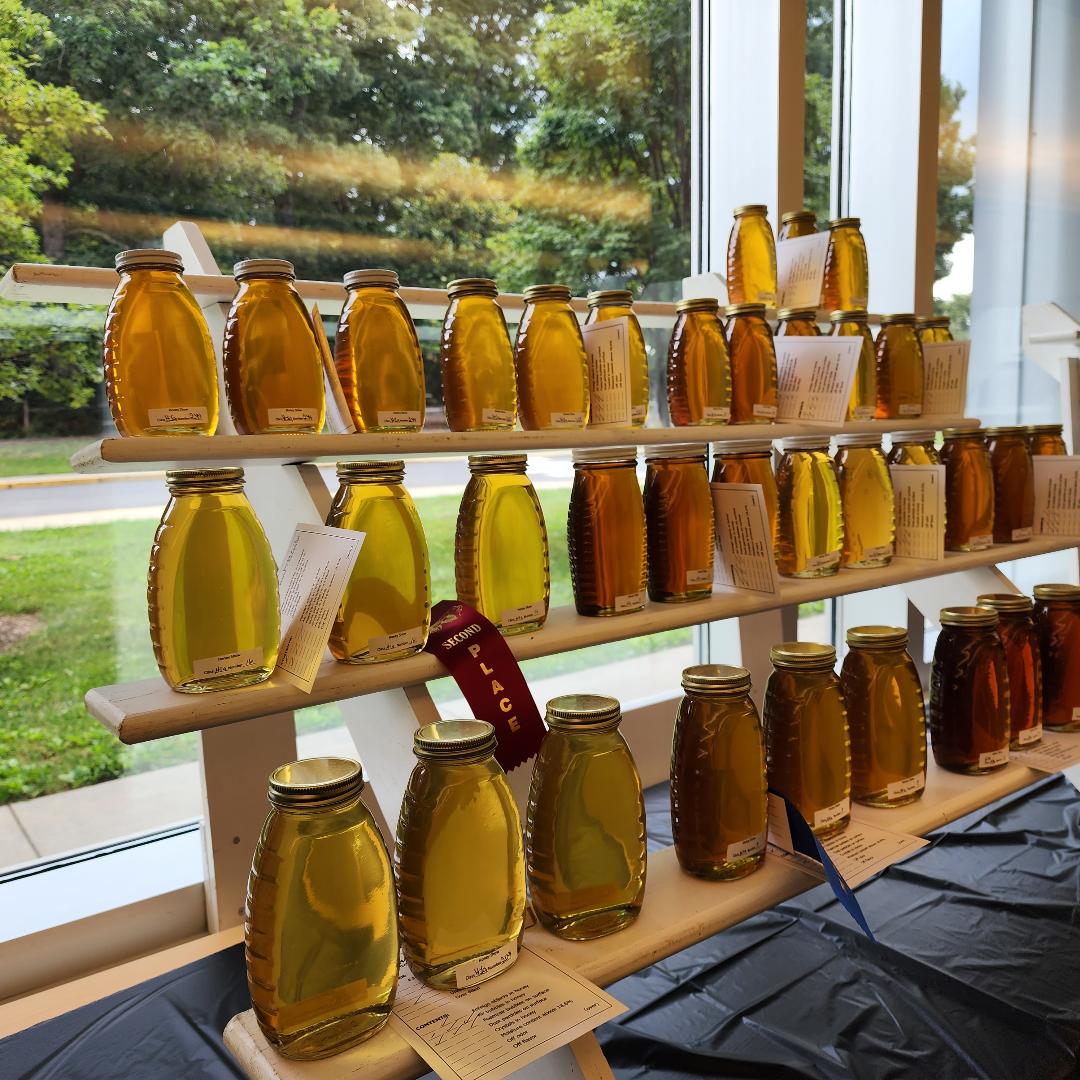
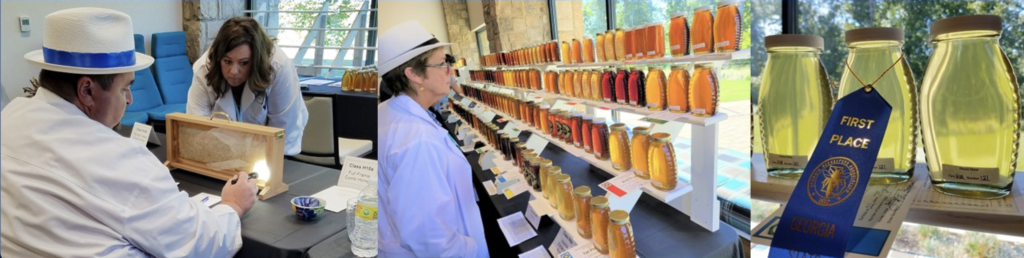
 Class: Honey Show Preparation Training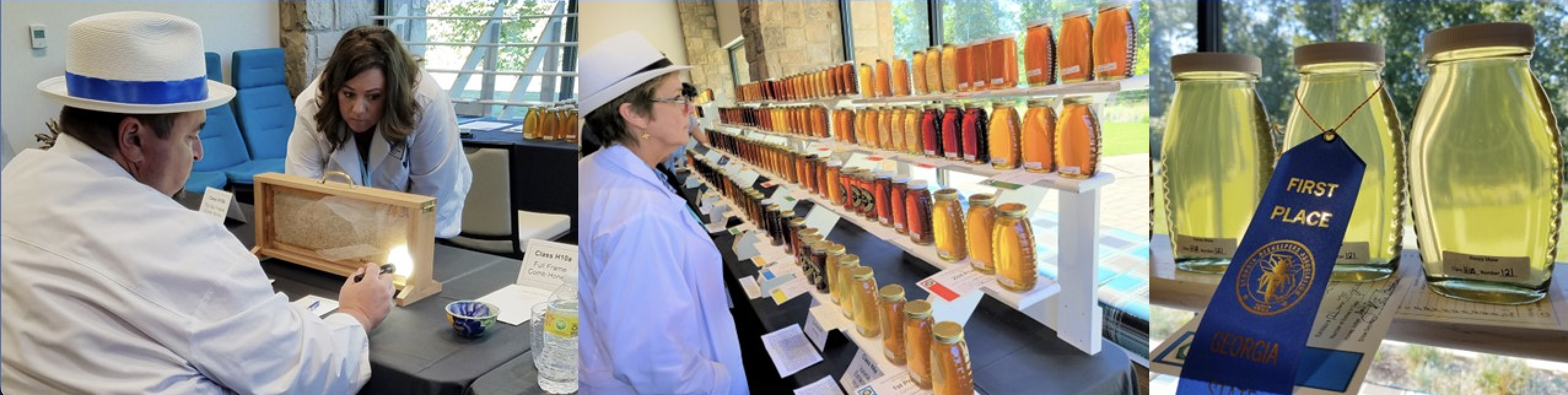
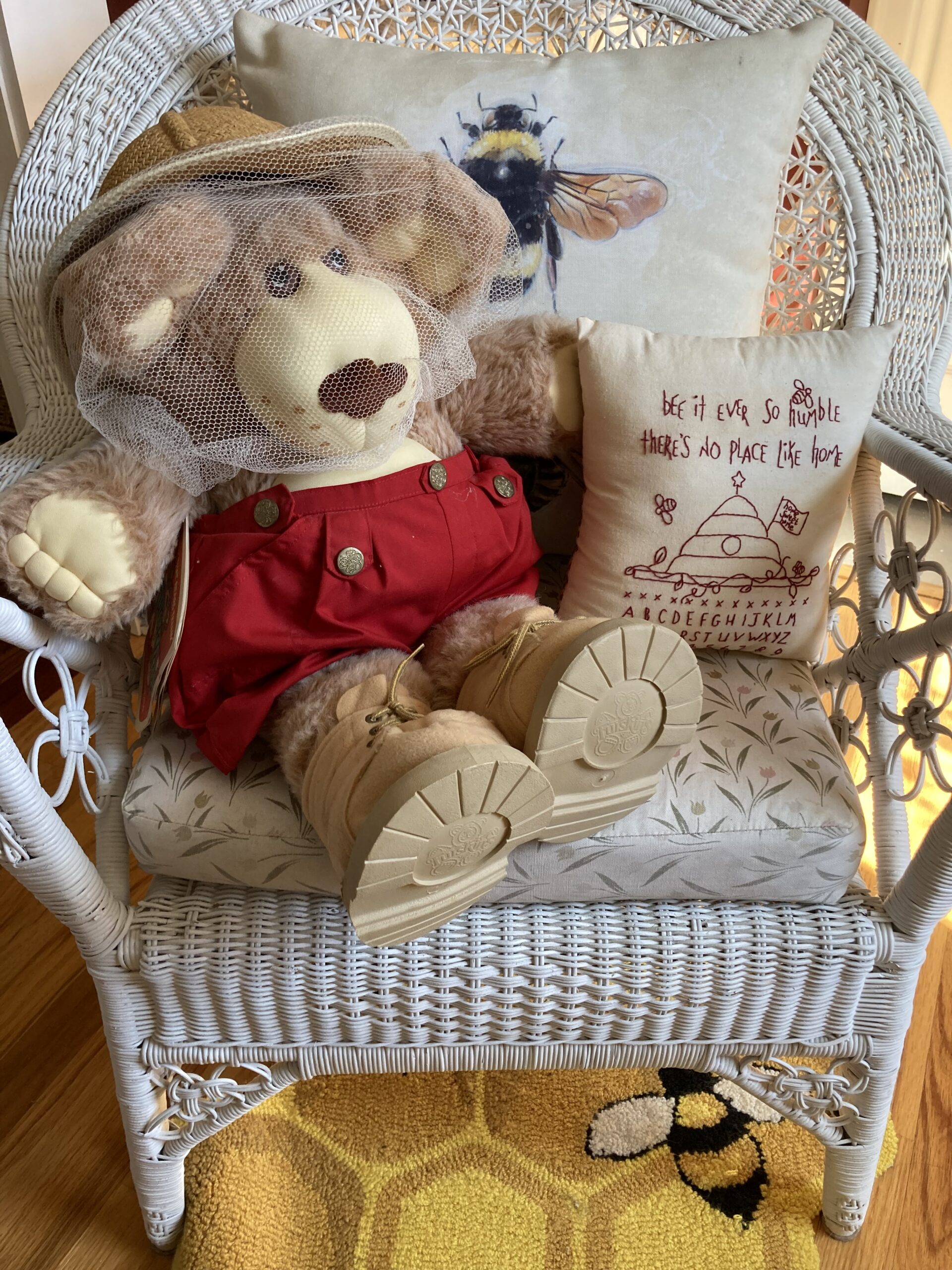
 “ANYTHING GOES” will be our theme for the silent auction at the NCSBA state conference on March 10-11, 2023, in Monroe, NC. The Chatham County Beekeepers have taken on the task of organizing auctions next year. We challenge every association to donate a few treasures. No worries if you are not attending but would like to donate. Regional directors, our state inspectors, or a member from your association that is attending the conference can collect items for the auction.
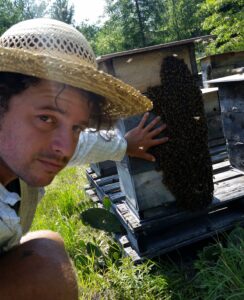 After winning 6 hives in a poker game, Sam Comfort worked for several years in commercial beekeeping across America. He started Anarchy Apiaries in 2005 to explore permaculture ideas of low input natural cycles. He breeds queen from hardy survivors, experiments with splitting techniques, and messes around with hive designs. So the mission is to 1) make more beehives than there are televisions, and 2) have a good time, all the time (with bees). Anarchy Apiaries runs around 1000 hives that split seasonally into around 2000 mating nucs with no treatments, minimal feeding, and do-it-yourself hive boxes in New York and Florida and spots in between. Through teaching independent, biological beekeeping, he hopes to make it more affordable, approachable, and enjoyable; thus, bring the means of production back to the beekeeper.
 Dr. Margaret J. Couvillon is a broadly trained bee researcher with a particular interest in the foraging and recruitment behaviors of the honey bee. I earned my undergraduate degree from Loyola University in New Orleans (B.S. in Biology, minor in Chemistry) and then spent a year as an AmeriCorps *NCCC volunteer. I completed a M.S. in Neurobiology at Duke University before moving overseas for my Ph.D. with Professor Francis Ratnieks at the University of Sheffield, where I investigated mechanisms of nestmate recognition in honey bees and stingless bees. As a postdoctoral researcher with Professor Anna Dornhaus at the University of Arizona, I investigated proximate and ultimate explanations for worker size variation in the bumble bee Bombus impatiens. For a second postdoc, I rejoined the lab of Francis Ratnieks, now at the University of Sussex in Brighton, England. There I worked to develop the honey bee, in particular its waggle dance communication, as a bioindicator for the “health” of the British landscape.
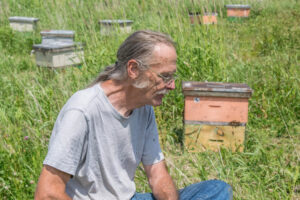 Mike Palmer bought his first two packages of bees from FW Jones Company of Quebec in 1974. They cost $10.50 delivered. Neither colony made it through the first winter, but he kept trying and built up to 200 hives by 1981.